Cardioneuroablation on Video

A collection of interviews, news reports, and in-lab demonstrations featuring our team, gathered to help you see and hear how cardioneuroablation works, in the words of the physicians who developed it.

15 recordings · 5 chapters · English, Portuguese & Spanish

Watching these videos in English

Many of these recordings were made for audiences in Brazil and Latin America, so the spoken language is Portuguese or Spanish. On most of them, YouTube can display auto-translated English subtitles; turn them on inside the player:

Videos marked English need no subtitles. Auto-translation depends on the video having captions and its quality varies, so treat it as a helpful aid rather than a perfect transcript.

  1. 1Play the video, then click the settings gear (⚙) at the bottom-right of the player.
  2. 2Open “Subtitles/CC,” then choose “Auto-translate.”
  3. 3Select “English.”

Jump to a chapter


Interviews & International Reports

Interviews given to medical societies and international outlets, and news coverage of the team's teaching missions abroad.
Portuguese

Podcast · Conexão SOBRAC

What Cardioneuroablation Is, and Who It Helps

On the official podcast of the Brazilian Society of Cardiac Arrhythmias (SOBRAC), the team discusses the history of the technique, who it is indicated for, and how the procedure was refined over the years to treat arrhythmias safely.

Spoken in Portuguese. Turn on English subtitles in the player.

Spanish

News report · Canal TRO

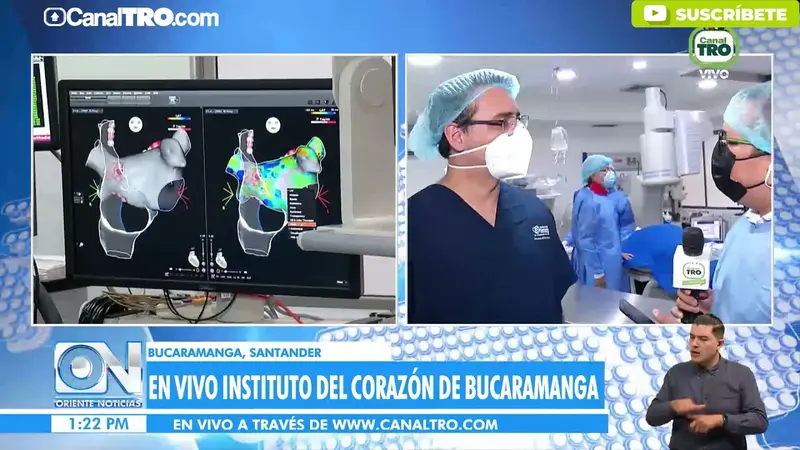
Pioneering Cardioneuroablation in Colombia

Television coverage of a teaching mission at the Instituto del Corazón de Bucaramanga. Dr. Carlos Pachón explains, in simple terms, how the technique helps young patients who faint, often avoiding the need for a pacemaker.

Spoken in Spanish. Turn on English subtitles in the player.

English

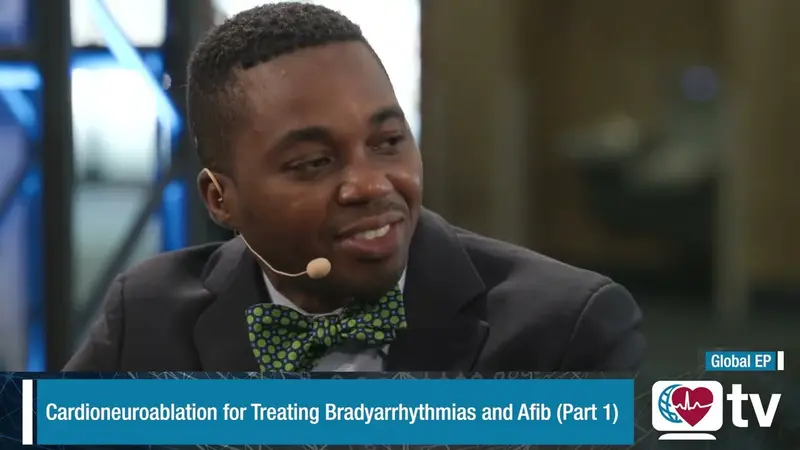
Interview · Heart Rhythm TV

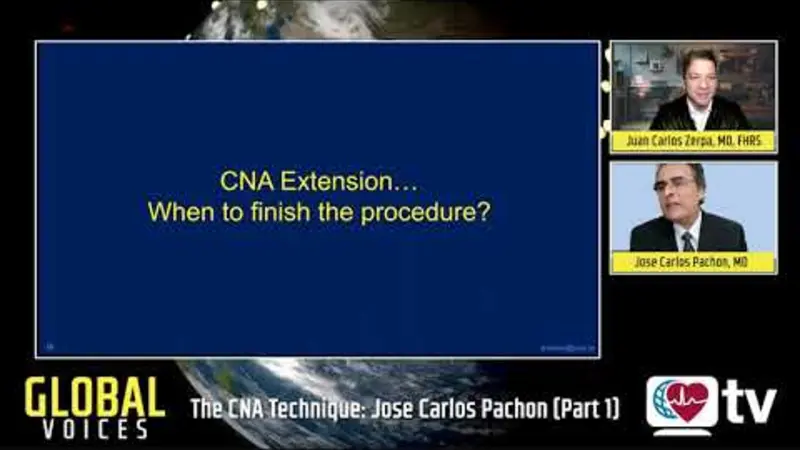
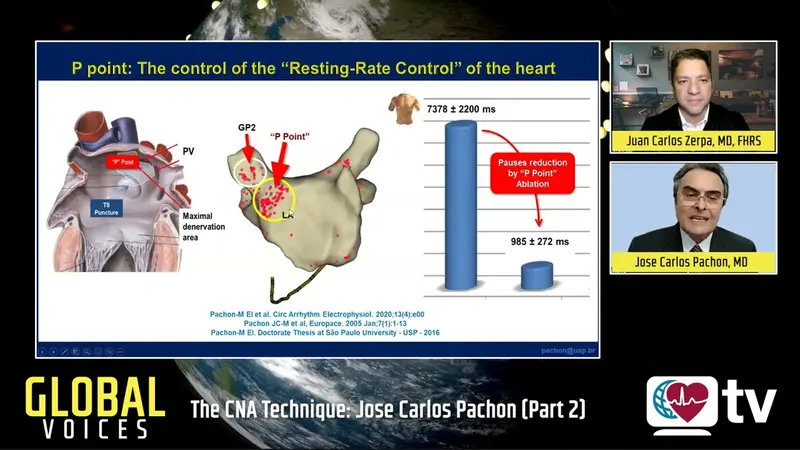
The CNA Technique (Part 1)

Prof. José Carlos Pachón is interviewed on the Heart Rhythm Society's Global EP program about the anatomical discovery that the procedure is built on.
English

Interview · Heart Rhythm TV

The CNA Technique (Part 2)

The interview continues, focusing on clinical results and the long-term improvement in quality of life for patients with complex arrhythmias.

English

Interview · Heart Rhythm TV

For Bradyarrhythmias & Atrial Fibrillation

How the technique is applied not only when the heart beats too fast and disorganized (atrial fibrillation), but also when it beats too slowly (bradyarrhythmias).

English

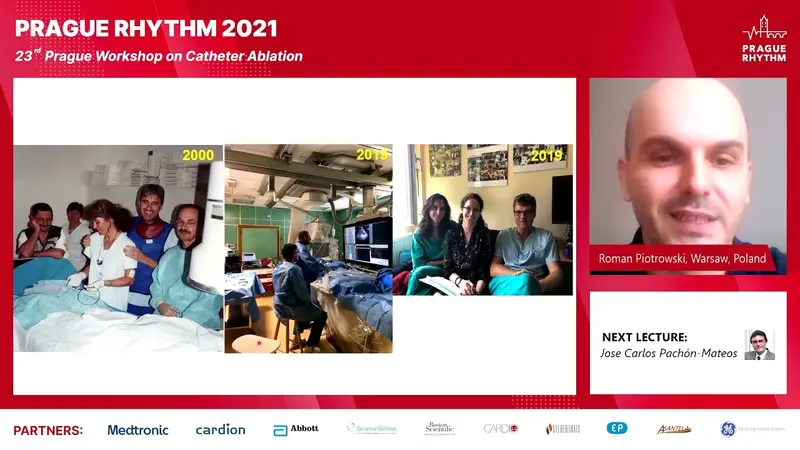
Lecture · Prague Rhythm 2021

Cardioneuroablation for Functional Bradycardias

An international lecture, delivered in English, on the role of ablation in treating functional (vagally mediated) slow heart rhythms.


Arrhythmias & Everyday Life

Longer, podcast-style conversations, warmer and more didactic, for patients who want depth about daily life and returning to routine.

Portuguese

Podcast · Saúde em Pauta

Cardiac Stimulation: The Secret of a Healthy Heart

A nearly 50-minute, plain-spoken conversation with Prof. José Carlos Pachón about how modern medicine controls and treats many different kinds of arrhythmia to keep the heart healthy.

Spoken in Portuguese. Turn on English subtitles in the player.
Portuguese

Interview

Why Arrhythmias Don't Have to Stop You Playing Sports

An interview that pushes back on the idea that an arrhythmia means giving up an active life. With the right treatment and follow-up, a safe return to sport and physical activity is often possible.

Spoken in Portuguese. Turn on English subtitles in the player.


Quick Questions, Clear Answers

Short, direct clips from Hospital do Coração (HCor)'s explainer series, useful for a fast answer to a common question.

Portuguese

HCor Explains

Do You Feel Your Heart Race?

A short, very visual explainer: what actually happens in your body during an arrhythmia, and why you feel those palpitations in your chest.

Spoken in Portuguese. Turn on English subtitles in the player.

Portuguese

HCor Explains

Can Arrhythmia Be Prevented?

Practical points on prevention and the warning signs worth checking, with the reassuring message that nearly every arrhythmia has a safe, effective treatment.

Spoken in Portuguese. Turn on English subtitles in the player.


Inside the Procedure: Demonstrations

More technical recordings from the electrophysiology laboratory. They were made primarily for teaching other physicians, but they are a clear window onto the technology used in these procedures.

Demonstration

EP-lab demonstration

Improving the Results of AF Ablation

A brief, visual demonstration of how cardioneuroablation combined with the VAFIT test aims to improve outcomes for people with atrial fibrillation.

Mostly visual, from the EP lab; narration, where present, is technical.

Demonstration

EP-lab demonstration

Cardioneuroablation Guided by Vagal Stimulation

How the team uses real-time mapping technology to locate and precisely treat the affected areas of the heart.

Mostly visual, from the EP lab; narration, where present, is technical.

Demonstration

EP-lab demonstration

The VAFIT Protocol, Step by Step

A look inside the procedure room at the rigorous check the team performs to confirm, during the procedure itself, that the ablation has succeeded.

Mostly visual, from the EP lab; narration, where present, is technical.

Demonstration

Archive footage

Inside the Electrophysiology Lab

Historical footage of Dr. Enrique Pachón's team at work in the procedure room, showing the care and the advanced equipment behind the service's treatments.

Archive clip; little or no narration.


Academic Lectures

Lectures and classes recorded for the academic and university community.

Portuguese

Academic lecture · CEUMA University

Lecture at CEUMA University

A full academic lecture by Prof. José Carlos Pachón, sharing technical knowledge and advances in cardiology with health professionals and students.

Spoken in Portuguese. Turn on English subtitles in the player.

These recordings are for information and education. They do not replace an individual medical evaluation, and watching them does not create a doctor–patient relationship.

Have a Question After Watching?

If you or a family member has arrhythmias or unexplained fainting and you would like to know whether cardioneuroablation applies, our team reviews international inquiries and answers within one business day.