Cardioneuroablation is performed by the physicians who pioneered the technique and may help patients avoid pacemaker implantation.

Cardioneuroablation is a catheter-based procedure for patients with recurrent vasovagal syncope and functional bradycardia. Our group described the technique in 2005, and its CNA procedure volume exceeds that of any other center worldwide.

International Patient Program · São Paulo, Brazil

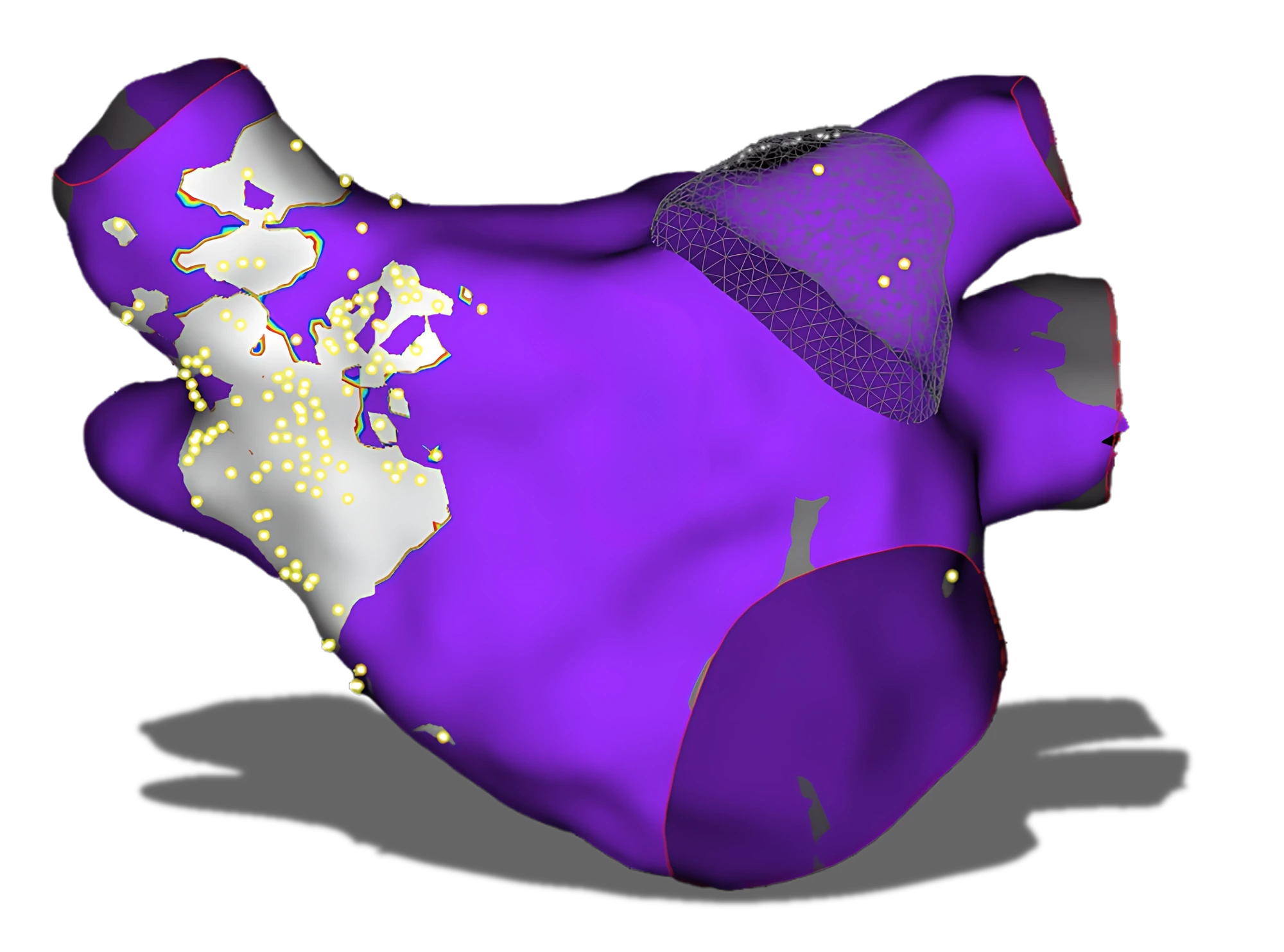
Three-dimensional electroanatomical map with highlighted regions and mapping points.

3D electroanatomical mapping

2005Technique described by our group
20+Years of dedicated experience
2 to 3Days in the hospital
~92%Syncope-free in published RCT*

Living with vasovagal syncope can be exhausting. Another treatment option may be available.

The Condition

Vasovagal syncope is the most common form of fainting and is strongly linked to an overactive vagal response. For many patients, medications fail, leaving a permanent pacemaker as the only option offered.

For a significant subset of patients, especially younger adults, cardioneuroablation offers another option: a one-time, catheter-based procedure that rebalances the autonomic nervous system by targeting the cardiac ganglionated plexi. It leaves no device implanted, so there is no need for lifetime battery replacements.

You may be a candidate if:

  1. You have recurrent vasovagal syncope, often with sudden loss of consciousness and minimal warning.
  2. You have a documented cardioinhibitory or mixed response on tilt-table testing.
  3. Lifestyle measures, compression therapy, and pharmacologic options (midodrine, fludrocortisone, beta-blockers) have failed or are not tolerated.
  4. A pacemaker has been offered or recommended, but you want to explore a catheter-based alternative first.
  5. You have functional (vagally mediated) AV block or sinus node dysfunction without structural heart disease.

Candidacy is assessed individually after a review of your clinical history and test results (Holter, tilt-table, echocardiogram). A teleconsultation is the first step.

How cardioneuroablation works.

Under general anesthesia, physicians introduce small catheters through the femoral veins. They use 3D electroanatomical mapping to identify the cardiac ganglionated plexi and selectively ablate them with radiofrequency energy.

The Procedure

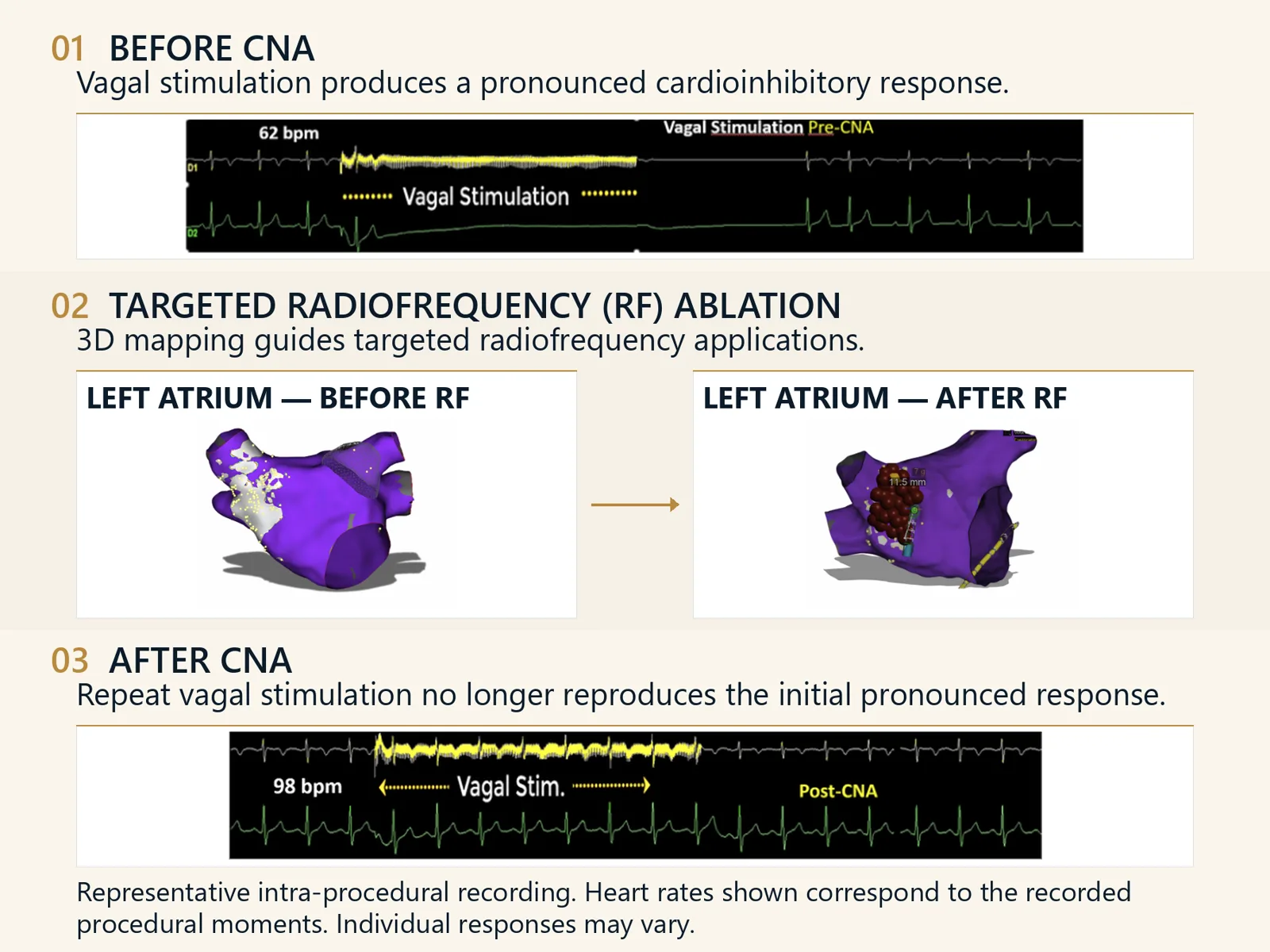
Clinical record in three steps: a pre-CNA tracing showing a pronounced cardioinhibitory response to vagal stimulation (62 bpm); left atrium 3D maps before and after targeted radiofrequency ablation; and a post-CNA tracing showing the response no longer reproduced (98 bpm).
Left atrium — 3D map: ganglionated plexi. Representative intra-procedural recording; individual responses may vary.

A catheter-based, nonsurgical procedure

The catheters enter through the femoral veins, so the procedure requires no chest incision or sternotomy and leaves no device implanted.

3D electroanatomical mapping

EnSite™ X and equivalent platforms allow the team to locate ganglionated plexi with submillimeter precision. This software was created by Prof. Dr. José Carlos Pachón Mateos and developed jointly with St. Jude Medical (now Abbott); it is available for use worldwide on all new Abbott EnSite™ X systems.

Extracardiac vagal stimulation

During the procedure, extracardiac vagal stimulation confirms that vagal denervation endpoints have been reached.

Our group pioneered this method.

Typical procedure time

The procedure typically takes 2 to 3 hours under general anesthesia. Patients are monitored overnight and, in most cases, discharged by day 2.

The group that described the technique still performs it.

Cardioneuroablation was first reported in the medical literature in 2005 by Prof. Dr. José Carlos Pachón Mateos and colleagues. Two decades later, that same team continues to refine the procedure, publish research on it, and train electrophysiologists worldwide.

Our Team

The originator performs the procedure

Prof. Dr. José Carlos Pachón Mateos ORCID, Prof. Dr. Enrique I. Pachón Mateos ORCID, and Dr. Carlos Thiene Cunha Pachón ORCID personally perform the procedure, together with the other specialists of our team.


Methods our team developed

Our team uses two methods it developed: spectral analysis of fragmented endocardial potentials and extracardiac vagal stimulation. Both techniques are described in peer-reviewed publications by our group and are standard elements of every CNA we perform.


Referral volume and publications

Patients from more than a dozen countries have traveled to São Paulo for CNA. Our publications are cited in nearly every systematic review and meta-analysis on the topic.


The 2026 teaching record

Between January and June 2026 alone, Prof. Pachón's calendar records eleven scientific engagements in Asia, Europe, and the Americas — invited lectures, the chairmanship of a joint HRS/LAHRS session at Heart Rhythm 2026 in Chicago, and proctoring visits with live demonstrated cases in Porto and Lisbon.

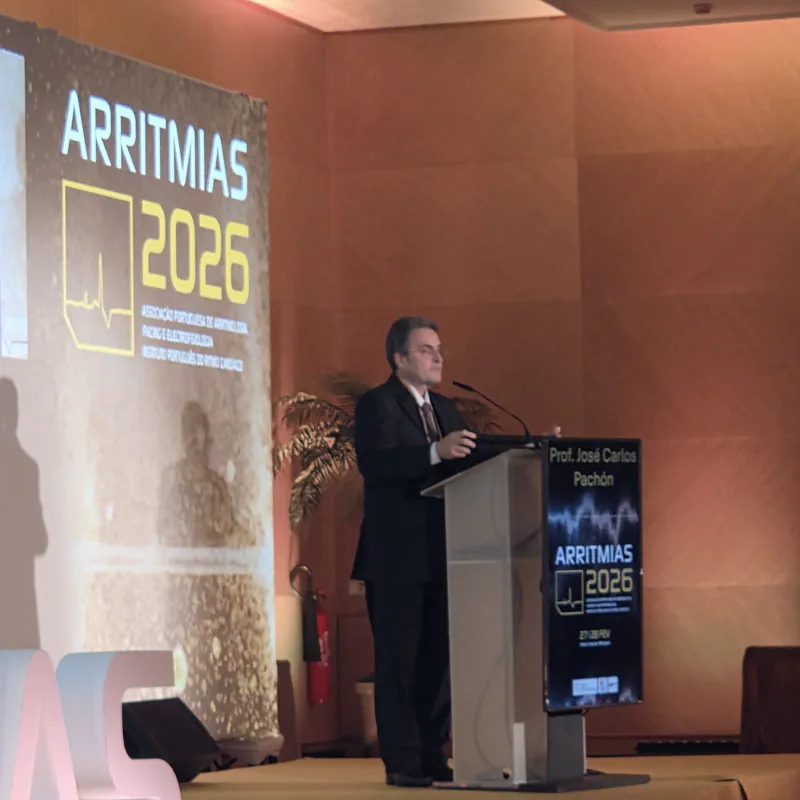
Prof. José Carlos Pachón Mateos at the podium during Arritmias 2026 in Cascais, Portugal; the podium display reads 'Prof. José Carlos Pachón, Arritmias 2026.'

Podium at Arritmias 2026, Cascais, Portugal, February 2026.

Selected itinerary · Jan–Jun 2026

Xi'an · ChinaJAN
Cascais · PortugalFEB
Chicago · USAAPR
Porto · Lisbon · PragueMAY
São Paulo · BrazilJUN
HRS webinar · Jakarta · RussiaVIRTUAL
See the full 2026 scientific record

The peer-reviewed evidence to date.

CNA is an emerging therapy. It is not yet a Class I guideline recommendation, and a large multicenter randomized trial remains pending. Observational and randomized data consistently show a notable benefit in carefully selected patients.

Published Evidence

Randomized controlled data

A randomized study of 48 patients with recurrent syncope reported approximately 92% syncope-free survival after CNA, compared with 46% with optimal non-pharmacologic treatment at follow-up (p<0.001).

92% syncope-free survival after CNA
46% with optimal non-pharmacologic treatment
Patients randomizedN = 48
Significancep<0.001

Piotrowski R et al. Long-term effects of cardioneuroablation for vasovagal syncope. Circulation AE (2023). Consistent with systematic review data reported by Armani Prata et al., Heart Rhythm (2024).

U.S. multicenter registry

The first multicenter U.S. CNA registry included data from 205 patients across 15 centers between 2018 and 2024. The results demonstrated a notable reduction in syncope burden with an acceptable safety profile.

Patients205
Centers15
Period2018–2024

Outcomes From the U.S. Multicenter CNA Registry. JACC: Clinical Electrophysiology (2025). These observational data support continued investigation, including randomized trials.

Textbook from the creators

Book cover: Cardioneuroablation — A Comprehensive Guide from the Creators, by the Pachón group.

Cardioneuroablation — A Comprehensive Guide from the Creators

Stop the Heart for Survival · Unveiling the Fascinating Strategy of Life

José Carlos Pachón Mateos · Enrique I. Pachón Mateos · Carlos Thiene Cunha Pachón — 1st edition, 2025 · English · ISBN 978-6599302961

Available on Amazon

Selected publications from our group

2020

Extracardiac vagal stimulation as an endpoint for cardioneuroablation.

Circulation: Arrhythmia and Electrophysiology
2023

Multiple systematic reviews and international registries citing the Pachón method.

AER, Europace, Heart Rhythm
2025

Cardioneuroablation: three different approaches.

Progress in Cardiovascular Diseases

From first contact through the return home, the process typically takes less than two weeks.

We designed the process for international patients to keep time away from home to a minimum and avoid unnecessary costs. Most patients do not need a hotel stay.

Your Journey

  1. Teleconsultation

    We review your clinical history, tilt-table test, Holter monitor, and echocardiogram to assess candidacy.

  2. Arrival

    After a direct transfer from GRU airport to the hospital, you are admitted and complete the pre-procedure workup the same day.

  3. Procedure

    Our senior team performs CNA under general anesthesia.

  4. Observation

    You spend one night in monitored recovery. Travel clearance is typically given within 24 to 48 hours.

  5. Home & follow-up

    We provide remote follow-up at 30, 90, and 180 days and stay in contact with your local cardiologist.

Around five days from arrival to the flight home.

A Recent International PatientLos Angeles

  1. Monday Evening

    Admission

    She was transferred directly from Guarulhos International Airport to the hospital and completed the pre-procedure workup that night.

  2. Tuesday Morning

    Procedure

    Cardioneuroablation was performed under general anesthesia, followed by overnight monitored observation at the hospital.

  3. Wednesday

    Re-evaluation

    Her recovery was re-evaluated on the third day, with continued monitored observation at the hospital.

  4. Thursday

    Discharge

    She was cleared for discharge on the fourth day; her return flight was confirmed and her remote follow-up schedule was established before departure.

  5. Friday

    Flight home

    On the fifth day, she boarded her flight back to California.

This past week, a patient from Los Angeles completed the process in around five days. She arrived Monday evening, underwent cardioneuroablation Tuesday morning, was re-evaluated on Wednesday, and was cleared for discharge on Thursday. On Friday, she was on a flight back to California.

Shared with the patient's permission. Individual recovery timelines vary and depend on clinical course, comorbidities, and the treating physician's judgment. Some patients may require extended observation (1 to 2 additional days) before being cleared for air travel.

At a center with two decades of experience, costs are a fraction of U.S. out-of-pocket pricing.

Cardioneuroablation does not yet have a dedicated CPT billing code in the United States, so it is typically billed as catheter ablation for atrial fibrillation, the procedure most comparable in complexity and resources.

Cost

United States: Self-Pay

Typical uninsured range

USD 36,000 to 80,000

Based on 2024 to 2025 published facility charges for atrial fibrillation catheter ablation at academic medical centers. Actual billed amounts may be higher. Physician, anesthesiology, and facility fees are included.

Sources: CMS, published academic hospital price transparency files. This is the comparable billing code used when CNA is performed in the U.S.

São Paulo: All-Inclusive

Detailed quote on request

All-inclusive estimate

Our total estimate includes facility fees, all single-use catheters (Abbott/St. Jude Medical, FDA-cleared), the 3D EnSite™ X mapping system, extracardiac vagal stimulator, physician team, and anesthesiology. The estimate is itemized, and unused materials are not charged.

A detailed written quote is provided after teleconsultation and review of your clinical profile. The quote itemizes all fees and does not obligate you to proceed.

Savings often exceed 50%

Even accounting for international travel, the total cost is typically a fraction of equivalent self-pay pricing in the United States. Most patients do not require a hotel stay.

Answers to common questions.

FAQ

CNA does not currently have a dedicated FDA indication or CPT billing code. The catheters and mapping systems used during the procedure (Abbott/St. Jude EnSite™ X platform, irrigated force-sensing ablation catheters) are FDA-cleared medical devices. The procedure itself is performed at U.S. centers under their general authority to practice catheter ablation. We discuss this regulatory status during the teleconsultation.

Most U.S. insurers do not currently cover cardioneuroablation for vasovagal syncope or functional bradycardia, and most do not cover procedures performed abroad. Our international program is designed for self-pay patients. Some patients use Health Savings Accounts (HSA) or Flexible Spending Accounts (FSA) for qualifying portions of the expense. You should verify with your own plan administrator.

As with any catheter-based cardiac procedure, CNA carries potential risks including vascular complications at the femoral access site, pericardial effusion or tamponade, transient arrhythmias, reinnervation over time, and rare adverse events related to anesthesia. Published series report low rates of major complications, but no procedure is risk-free. The informed consent process includes a detailed discussion of risks before the procedure.

Most international patients plan to stay 4 to 6 days in total: one day for admission and pre-procedure workup, one day for the procedure, one to two days of observation, and a one- to two-day buffer before taking a long-haul flight. Some patients require extended observation depending on their clinical course. We recommend avoiding tight connections on the return trip.

Our senior electrophysiology team performs the procedure directly. The team is led by Prof. Dr. José Carlos Pachón Mateos and includes Prof. Dr. Enrique I. Pachón Mateos and Dr. Carlos Thiene Cunha Pachón.

The procedure is performed at Hospital do Coração (HCor) or Hospital Sírio-Libanês (HSL). Both are internationally recognized cardiac centers in São Paulo with modern electrophysiology laboratories and advanced 3D mapping systems. The single-use disposable materials are manufactured in the United States by Abbott/St. Jude Medical, are FDA-cleared, and are never reused.

We provide remote follow-up at 30, 90, and 180 days after the procedure and are available for urgent communication outside those windows. Before traveling, we strongly recommend that you identify a local cardiologist or electrophysiologist in your home country so that we can send them your full procedural documentation. We actively support continuity of care.

Ideally, please provide a recent ECG, 24-hour Holter monitor, tilt-table test result, transthoracic echocardiogram, a concise clinical summary of syncope episodes (frequency, triggers, injuries), and a list of medications tried. When possible, provide the original tracings, recordings, or images from these tests; summary reports alone are often insufficient.

The process begins with a conversation and does not require a commitment.

During a teleconsultation, we assess whether CNA is appropriate for your case. If you are not a suitable candidate, we will tell you.

Request Consultation

To begin, contact our International Program directly by email or WhatsApp. We answer inquiries within one business day and can arrange a teleconsultation from there.

Helpful to include in your first message

  • A brief summary of your syncope episodes (frequency and triggers)
  • Results of a tilt-table test, Holter monitor, or ECG, if available
  • Whether a pacemaker has been recommended to you
Clinic Address CEP 04013-000
Rua Cubatão, 86, Suite 504
São Paulo, SP, Brazil
Languages English, Portuguese, Spanish
Response time All inquiries are answered within one business day. Teleconsultations are typically scheduled within one week.

Your information is handled confidentially and never shared with third parties. We do not sell contact data. We are not affiliated with any medical tourism broker or intermediary.

Important Disclosures

Not medical advice.

The information on this website is provided for general educational purposes and does not constitute medical advice, diagnosis, or treatment. Always seek the advice of a qualified healthcare provider regarding any medical condition.

No patient-physician relationship.

Visiting this website, submitting an inquiry form, or corresponding with our team does not create a patient-physician relationship. That relationship is established only after formal evaluation and written consent.

Evidence status of cardioneuroablation.

Cardioneuroablation is an emerging therapy supported by a growing body of observational data, small randomized trials, and systematic reviews. It does not currently hold a Class I recommendation in major international guidelines. Larger multicenter randomized controlled trials are in progress. Individual results vary. Freedom-from-syncope rates reported in the literature range from approximately 73% to 92% depending on patient selection, follow-up duration, and technique.

Regulatory status in the United States.

Cardioneuroablation does not currently have a dedicated FDA indication or a specific CPT billing code in the United States. The catheters and 3D mapping systems used during the procedure are FDA-cleared devices manufactured in the United States. U.S. patients considering this procedure should consult with their local cardiologist and their insurance carrier regarding coverage and continuity of care.

Risks of the procedure.

As with any invasive cardiac procedure, cardioneuroablation carries potential risks including but not limited to: vascular complications at access sites, pericardial effusion or tamponade, thromboembolic events, transient or sustained arrhythmias, reinnervation over time, and risks associated with general anesthesia. A complete discussion of risks and alternatives occurs before the procedure as part of informed consent.

Testimonials and case descriptions.

Any patient case descriptions or testimonials featured on this website are shared with the patient's explicit written permission. They reflect one individual experience and are not a guarantee, warranty, or prediction of your own outcome. Individual recovery timelines, clinical response, and long-term results vary.

Cost comparisons.

The U.S. cost ranges cited on this website are based on publicly available price transparency data for catheter ablation for atrial fibrillation at U.S. academic medical centers (2024 to 2025). Cardioneuroablation does not have a dedicated billing code in the U.S. and is typically billed under the closest comparable procedure. Actual charges vary by hospital, region, insurance status, and individual case complexity. A detailed, itemized written quote for your specific case is provided only after teleconsultation.

Continuity of care.

We strongly recommend that all international patients identify a local cardiologist or electrophysiologist in their home country before traveling for any cardiac procedure. We actively communicate procedural documentation to your local providers upon request.

No guarantees.

We make no warranty, express or implied, that any procedure will cure, eliminate, or prevent recurrence of syncope, bradyarrhythmia, or any other condition. Treatment is individualized and based on the best evidence available at the time.